
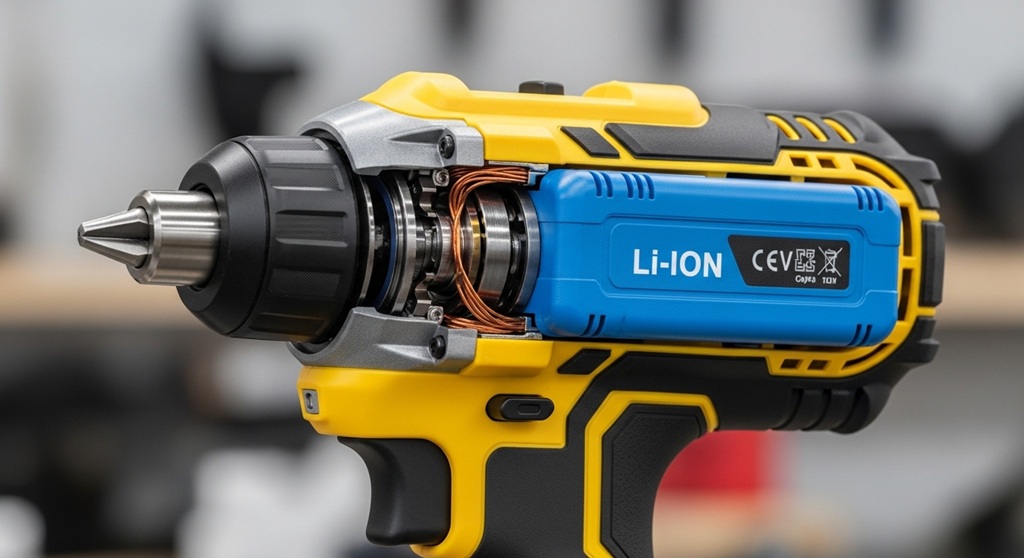
A lithium-ion battery is a rechargeable energy storage system that delivers high power, long runtime, and fast charging, making it ideal for modern cordless tools.
Imagine drilling through concrete or cutting hardwood without a cord holding you back. That freedom comes from lithium-ion technology. Over the past decade, lithium battery tools have replaced older nickel-cadmium (NiCd) systems because they deliver more power in a lighter package.
Here’s the problem: traditional batteries were bulky, slow to charge, and lost power quickly. That meant downtime, inconsistent performance, and frustration on the job site.
The shift to lithium-ion batteries solved this. These batteries use lithium ions moving between electrodes to store and release energy efficiently. The result is longer tool battery life, stable voltage, and faster recharge cycles.
According to industry data, lithium-ion batteries can deliver up to 2–3 times more energy density than older battery types. This directly translates to longer runtime and better tool performance.
Today, lithium battery tools dominate both professional and DIY markets because they are reliable, portable, and efficient.
How do lithium-ion batteries work inside cordless tools?
Short answer: Lithium-ion batteries store energy chemically and release it as electrical power when the tool is in use, ensuring consistent performance.
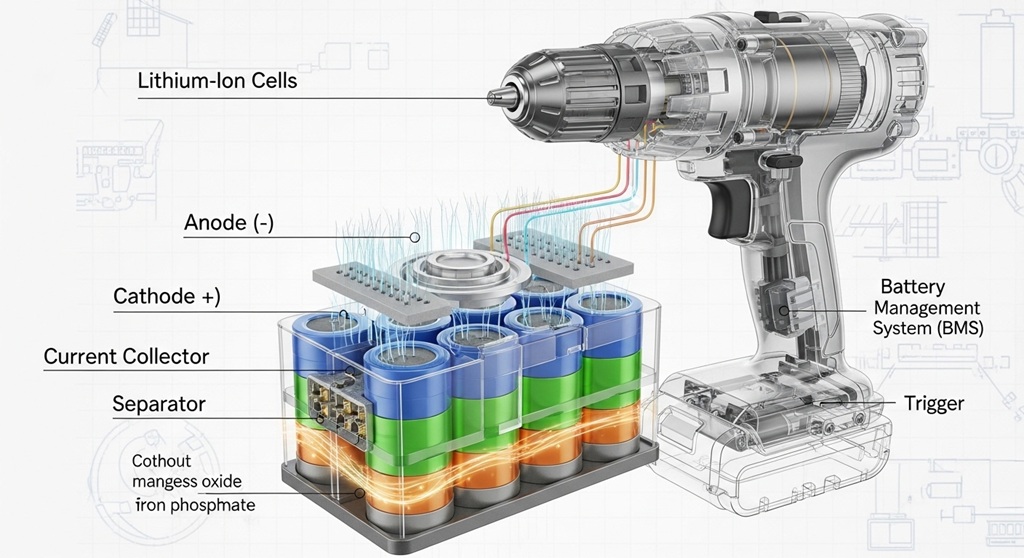
Inside every cordless drill or saw is a compact system of battery cells. Each cell contains:
- A positive electrode (cathode)
- A negative electrode (anode)
- An electrolyte that allows lithium ions to move
When you turn on a tool, lithium ions move from the anode to the cathode. This movement generates electrical energy that powers the motor.
When charging, the process reverses. This cycle can repeat hundreds or even thousands of times.
What makes lithium-ion stand out is efficiency. Unlike older batteries, they maintain a steady voltage output. This means your drill won’t slow down halfway through a job.
In practical terms:
- You get consistent torque
- Tools perform at full power longer
- Less downtime between charges
This is why lithium battery tools are now the industry standard.
Why do lithium battery tools last longer than traditional batteries?
Short answer: Lithium-ion batteries last longer due to higher energy density, lower self-discharge, and advanced battery management systems.
Tool battery life is one of the biggest concerns for users. Lithium-ion technology addresses this in several ways.
1. Higher Energy Density
Lithium-ion batteries store more energy in a smaller size. This means longer runtime without increasing weight.
2. Low Self-Discharge Rate
These batteries lose only about 1–2% charge per month, compared to 10–20% in older battery types.
3. No Memory Effect
Older batteries needed full discharge before recharging. Lithium-ion batteries do not. You can charge anytime without reducing lifespan.
4. Smart Battery Management Systems (BMS)
Modern lithium battery tools include built-in electronics that:
- Prevent overheating
- Avoid overcharging
- Balance cell performance
This combination significantly extends tool battery life and reliability.
What factors affect tool battery life in cordless tools?
Short answer: Tool battery life depends on usage intensity, temperature, battery capacity, and charging habits.
Even the best lithium-ion batteries can underperform if not used properly. Here are the key factors:
Usage Load
Heavy-duty tasks like drilling concrete or cutting metal drain batteries faster than light tasks.
Temperature
Extreme heat or cold reduces efficiency. Optimal range is typically 10°C to 30°C.
Battery Capacity (Ah Rating)
Higher amp-hour (Ah) ratings mean longer runtime. For example:
| Battery Capacity | Typical Usage Time |
|---|---|
| 2.0Ah | Light DIY tasks |
| 4.0Ah | Medium workloads |
| 6.0Ah+ | Heavy-duty professional use |
Charging Habits
- Avoid full discharge regularly
- Use manufacturer-approved chargers
- Store batteries partially charged (40–60%)
These habits can extend battery lifespan by up to 30–50%.
Are lithium-ion batteries safe for cordless tools?
Short answer: Yes, lithium-ion batteries are safe when used correctly and equipped with built-in protection systems.
Safety concerns often come from misuse or poor-quality batteries. High-quality lithium battery tools include multiple safety layers:
- Thermal protection to prevent overheating
- Overcharge and over-discharge protection
- Short-circuit prevention
Manufacturers also design batteries with durable casings to withstand drops and job site conditions.
However, users should follow basic safety practices:
- Avoid exposing batteries to water
- Do not use damaged batteries
- Store in a cool, dry place
When handled properly, lithium-ion batteries are both safe and reliable.
How fast do lithium-ion batteries charge in modern tools?
Short answer: Most lithium-ion batteries charge within 30–90 minutes depending on capacity and charger type.
Fast charging is one of the biggest advantages of lithium battery tools. Many brands now offer rapid chargers that reduce downtime significantly.
Typical charging times:
- 2.0Ah battery: 30–45 minutes
- 4.0Ah battery: 60 minutes
- 6.0Ah battery: 60–90 minutes
Advanced chargers also include cooling systems to maintain battery health during charging.
This allows professionals to keep multiple batteries in rotation, ensuring continuous workflow.
How do lithium-ion batteries compare to older battery technologies?
Short answer: Lithium-ion batteries outperform older technologies in weight, runtime, charging speed, and lifespan.
| Feature | Lithium-Ion | NiCd/NiMH |
|---|---|---|
| Energy Density | High | Low |
| Weight | Light | Heavy |
| Charging Speed | Fast | Slow |
| Memory Effect | No | Yes |
| Self-Discharge | Low | High |
This comparison explains why lithium battery tools have become the standard in both home and professional use.
What are real-world benefits of lithium battery tools?
Short answer: Lithium battery tools offer portability, consistent power, reduced fatigue, and increased productivity.
Let’s look at a practical scenario.
Case Study: A construction crew switched from NiCd to lithium-ion cordless tools. Over 6 months, they reported:
- 25% increase in productivity due to less downtime
- 40% reduction in battery replacements
- Improved worker efficiency due to lighter tools
These results align with broader industry findings. Reduced weight alone can lower user fatigue, which directly impacts output.
For DIY users, the benefits are equally clear:
- No cords or extension cables
- Easy portability
- Reliable performance for home projects
How can you extend the lifespan of lithium-ion tool batteries?
Short answer: Proper charging, storage, and usage habits can significantly extend battery lifespan.
To maximize tool battery life, follow these best practices:
- Avoid full discharge; recharge at 20–30%
- Store batteries in a cool environment
- Use original chargers only
- Clean battery contacts regularly
- Rotate batteries if using multiple packs
With proper care, lithium-ion batteries can last 3–5 years or more under regular use.
Conclusion: Why lithium-ion batteries are the backbone of cordless tools
Lithium-ion batteries have transformed how we use power tools. They solve the core problems of older systems: weight, inefficiency, and limited runtime. Today, lithium battery tools deliver consistent performance, faster charging, and longer tool battery life.
Whether you are a professional contractor or a DIY enthusiast, the benefits are clear. You get more done in less time, with less effort.
If you want to upgrade your workflow, now is the time to invest in high-quality cordless tools powered by lithium-ion technology. Choose tools with higher Ah ratings, reliable battery management systems, and fast chargers to get the most value.
Take action: Evaluate your current tools. If you are still using outdated battery systems, switching to lithium-ion could improve your efficiency immediately.
Frequently Asked Questions (FAQs)
How long does a lithium-ion battery last in cordless tools?
Short answer: Typically 2–5 years depending on usage and maintenance.
Battery lifespan depends on charging habits, workload, and storage conditions. Proper care can extend usability significantly.
Can lithium-ion batteries be overcharged?
Short answer: No, modern batteries prevent overcharging automatically.
Built-in battery management systems stop charging once the battery is full.
Why does my tool battery drain quickly?
Short answer: High workload, extreme temperatures, or aging batteries can cause fast drain.
Check usage conditions and battery health to identify the issue.
Is it okay to leave lithium batteries on the charger?
Short answer: Yes, but only with smart chargers.
Modern chargers stop charging automatically, but long-term storage on chargers is not recommended.
What does Ah mean in tool batteries?
Short answer: Amp-hour (Ah) measures battery capacity and runtime.
Higher Ah means longer usage time but slightly increased weight.
Are lithium battery tools worth the investment?
Short answer: Yes, due to better performance, efficiency, and lifespan.
They reduce downtime and improve productivity, making them cost-effective over time.
Can lithium-ion batteries be repaired?
Short answer: Not safely in most cases.
Damaged batteries should be replaced rather than repaired to avoid safety risks.
Read More Also: What You Gain From Hiring Roof Contractors in Athens AL for Inspections
Find out: Indoor Vs Outdoor Team Building And What Is Suitable for Different Teams?
