Choosing the right mountain bike is a big decision. You want something that will last for years, handle tough trails, and still feel great to ride. An aluminum frame mountain bike is one of the most popular choices for riders at every level. However, with so many options available, picking the right one can feel overwhelming.
This guide walks you through the key factors to consider. By the end, you will know exactly what to look for when shopping for a bike built to go the distance.
Why Aluminum Is a Smart Choice for Mountain Biking
Aluminum has earned its place as the go-to material for mountain bike frames. It offers a great balance of price, performance, and durability. Unlike steel, aluminum does not rust easily. This makes it a truly corrosion-resistant frame option, which is especially important if you ride in wet or humid conditions.
Additionally, aluminum is naturally light. A lightweight bike is much easier to handle on climbs and technical sections. You spend less energy pushing the bike and more energy enjoying the ride. For long-term use, this matters a great deal.
Many riders also appreciate how stiff aluminum feels. Stiffness transfers power more efficiently from your legs to the wheels. Therefore, you go faster with less effort.
Frame Geometry: The Foundation of a Good Fit
Frame geometry refers to the angles and dimensions that shape how a bike rides and handles. It is one of the most important factors to get right. A bike with poor geometry will never feel comfortable, no matter how good the components are.
There are a few key measurements to understand:
- Stack and reach define how upright or stretched out you sit on the bike.
- Head tube angle affects how the bike steers. A slacker angle gives more stability on descents.
- Chainstay length influences how nimble the bike feels. Shorter chainstays make the rear end snappier.
- Seat tube angle determines your pedaling position. A steeper angle is better for climbing.
Look for geometry that matches your riding style. Cross-country riders often prefer a more aggressive, forward-leaning position. Trail and enduro riders usually want something more relaxed and stable.
Suspension Type: Hardtail vs. Full Suspension
Aluminum frame mountain bikes come in two main suspension types: hardtail and full suspension. Each has clear advantages depending on how you ride.
A hardtail has a front suspension fork but no rear suspension. It is simpler, lighter, and easier to maintain. Hardtails are excellent for riders who want a strong MTB that performs well on cross-country trails or less technical terrain. They are also more affordable, which makes them a great starting point.
Full suspension bikes have both front and rear suspension. They absorb more bumps and give better control on rough, technical trails. However, they are heavier and more expensive. They also require more maintenance over time.
For most recreational riders who want long-term value, a high-quality hardtail is often the smarter choice. It gives you a lightweight bike with reliable performance and fewer parts to replace.
Wheel Size: 27.5 vs. 29 Inches
Wheel size has a big impact on how a mountain bike rides. The two most common sizes today are 27.5 inches and 29 inches. Each suits different riders and terrain types.
29-inch wheels, often called 29ers, roll over obstacles more easily. They maintain momentum better and offer more traction. Therefore, they work well on long rides and moderate trails.
27.5-inch wheels are smaller and more nimble. They accelerate faster and feel more playful on tight, twisty trails. However, they do not roll over obstacles as smoothly as 29ers.
Taller riders generally do better with 29-inch wheels. Shorter riders may find 27.5 inches a more comfortable and natural fit. When in doubt, try both sizes before you commit.
Drivetrain and Gearing: Smooth Shifting for the Long Haul
The drivetrain is the system of parts that moves the bike forward. It includes the chain, cassette, derailleur, and shifters. For long-term use, you want a drivetrain that is reliable and easy to maintain.
Modern mountain bikes mostly use 1x drivetrains, meaning one chainring in the front and multiple gears in the rear. This setup is simpler, lighter, and less likely to drop the chain compared to older 2x or 3x systems.
Look for drivetrains from reputable brands like Shimano or SRAM. Entry-level groupsets like Shimano Altus or Deore offer solid performance at a reasonable price. Mid-range options like SLX or NX Eagle provide better durability and shifting feel without breaking the budget.
Additionally, consider the gear range. More gears mean more options for steep climbs and fast descents. A wide-range cassette, such as 11-51 teeth, gives you plenty of range for varied terrain.
Brakes: Stopping Power Matters
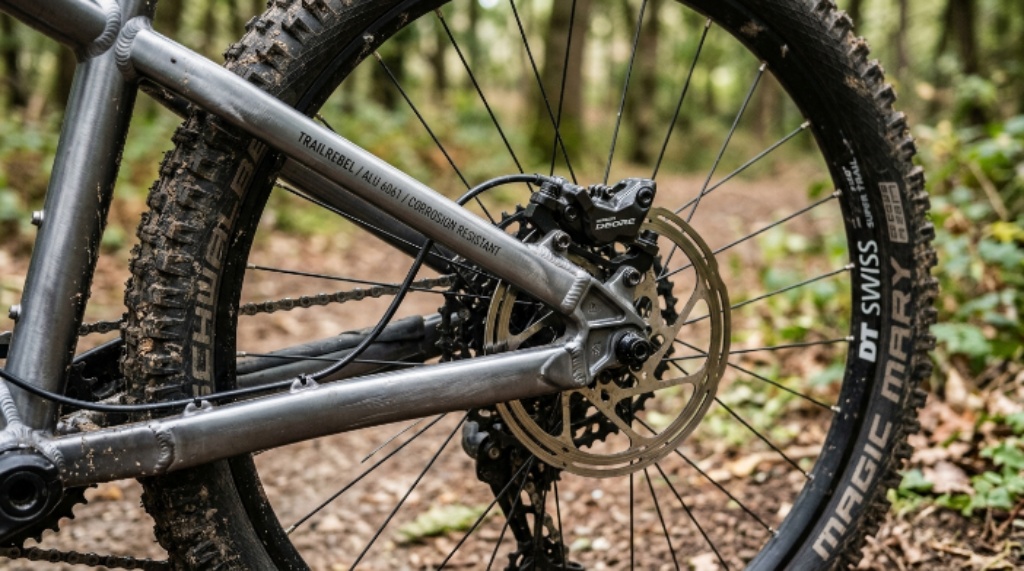
Brakes are a safety-critical component. For mountain biking, hydraulic disc brakes are the gold standard. They offer consistent stopping power in all weather conditions, including mud, rain, and dust.
Mechanical disc brakes are a budget-friendly alternative. They work well but require more frequent adjustment as the cables stretch over time. If your budget allows, start with hydraulic brakes. They will save you maintenance time in the long run.
Check the rotor size as well. Larger rotors, such as 180mm or 203mm, provide more stopping power for steep descents. Smaller rotors, around 160mm, are sufficient for flatter or less aggressive riding.
Fork Quality: Do Not Overlook This Part
The suspension fork on a hardtail does a lot of work. It absorbs impact from roots, rocks, and drops. A poor-quality fork will feel harsh and wear out quickly. A good fork, however, transforms how the bike rides.
Look for forks from trusted brands like RockShox or Fox. Pay attention to travel length, which is how far the fork compresses. Cross-country riding suits 100mm of travel. Trail riding benefits from 120mm to 140mm.
Also look for forks with a lockout feature. This lets you firm up the fork on smooth climbs so you do not waste energy bouncing. Additionally, check whether the fork is air-sprung or coil-sprung. Air forks are lighter and more adjustable. Coil forks are heavier but very consistent.
Tires: Your Connection to the Trail
Tires are often underrated, but they make a huge difference. The right tire gives you grip, control, and confidence on the trail.
For long-term use, choose tires with a tubeless-ready design. Tubeless tires run at lower pressures without the risk of pinch flats. They also allow you to add sealant inside, which automatically plugs small punctures.
Tire width is another factor. Wider tires, between 2.3 and 2.6 inches, offer more grip and comfort. Narrower tires roll faster but sacrifice traction.
Match your tread pattern to the terrain you ride most. Aggressive, knobby tread suits loose and muddy trails. A lower-profile tread is better for hard-packed or dry conditions.
Budget Considerations: Getting the Best Value
Aluminum mountain bikes are available across a wide price range. Entry-level models start around $500 to $800. Mid-range bikes fall between $1,000 and $2,000. Higher-end aluminum builds can reach $2,500 or more.
For long-term use, spending a little more upfront often saves money later. Cheap components wear out faster and cost more to replace. A mid-range bike with quality parts will outlast a budget model and require fewer repairs.
However, you do not need the most expensive option to have a great experience. Focus on getting a strong MTB with good bones: solid frame geometry, quality brakes, and a reliable drivetrain. You can always upgrade components later as your riding progresses.
Fit and Sizing: Get This Right First
No matter how good a bike is on paper, it will not perform well if it does not fit you. Always check the manufacturer’s sizing chart before buying.
Most brands size mountain bikes as Small, Medium, Large, and Extra Large. These sizes generally correspond to your height and inseam length. However, sizing varies between brands, so never assume.
If possible, visit a local bike shop and try riding different sizes. A proper fit means you can reach the handlebars comfortably, your knees do not overextend at the bottom of the pedal stroke, and you have enough standover clearance when you stop.
Maintenance Tips for Long-Term Performance
Buying the right bike is only part of the equation. Keeping it in good shape ensures it lasts for many years.
- Clean your bike after every muddy or wet ride.
- Lubricate the chain regularly to prevent rust and wear.
- Check brake pads every few months and replace them when worn.
- Inspect the fork seals for leaks and service the fork annually.
- Keep tires inflated to the recommended pressure before each ride.
These simple habits go a long way. A well-maintained aluminum frame mountain bike can last a decade or more with proper care.
Conclusion
Choosing an aluminum frame mountain bike for long-term use comes down to a few key decisions. Start with frame geometry that fits your body and riding style. Then choose the right suspension type, wheel size, drivetrain, and brakes for the trails you love. Pay attention to fork quality and tire choice, and always prioritize fit over everything else.
Aluminum is a fantastic material for mountain biking. It gives you a corrosion-resistant frame that holds up across seasons and conditions. A well-chosen aluminum mountain bike will reward you with years of reliable, enjoyable riding. Take your time, do your research, and invest in something you will be proud to ride for years to come.
Frequently Asked Questions
Is an aluminum frame good enough for serious mountain biking?
Yes, absolutely. Aluminum frames are used by professional and competitive riders worldwide. Modern alloys like 6061 and 7005 are light, stiff, and very durable. For most riders, an aluminum frame performs just as well as carbon, at a fraction of the cost.
How long does an aluminum mountain bike frame last?
With proper care and maintenance, an aluminum frame can last 10 to 20 years or more. Aluminum does not corrode the way steel does, which extends its lifespan significantly. The components, such as the drivetrain and brakes, will likely need replacing before the frame does.
What is the best wheel size for a beginner mountain biker?
Most beginners do well with 29-inch wheels. They roll smoothly over obstacles and are easier to control on varied terrain. However, shorter riders may find 27.5-inch wheels a more comfortable fit.
Should I buy a hardtail or full suspension aluminum mountain bike?
For beginners and intermediate riders, a hardtail is usually the better choice. It is simpler, lighter, and more affordable. Full suspension makes more sense if you regularly ride very technical, rocky, or rooty trails where rear suspension adds meaningful comfort and control.
Can I upgrade components on an aluminum mountain bike later?
Yes. One of the advantages of aluminum mountain bikes is their compatibility with a wide range of aftermarket components. You can upgrade the fork, brakes, drivetrain, and wheels over time as your skills and budget grow. Starting with a good frame and gradually improving parts is a very cost-effective strategy.
Related Topics: