
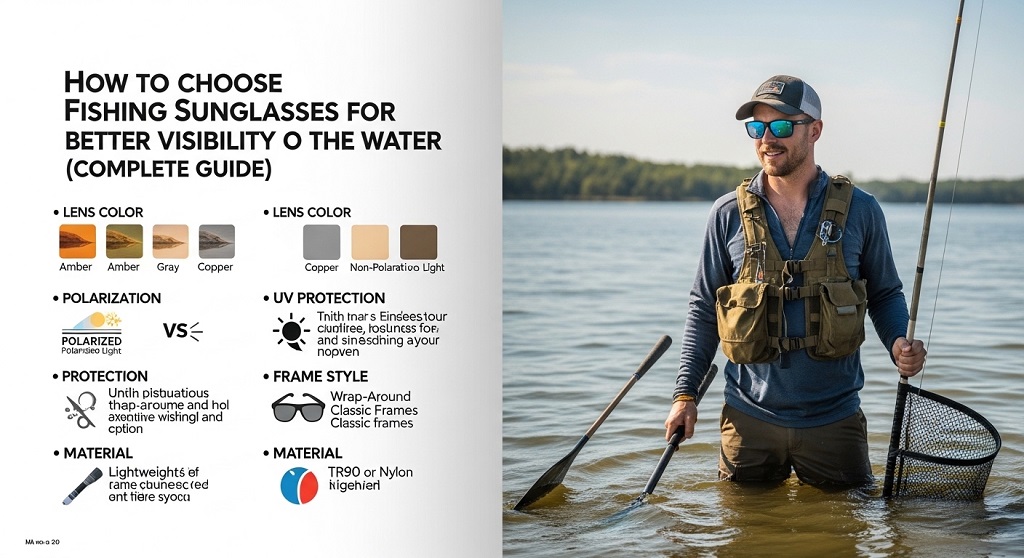
Fishing sunglasses are not just accessories. They help anglers see beneath surface glare, track fish movement, and reduce eye strain during long hours on the water. If you are learning how to choose fishing sunglasses, the right pair should include polarized lenses, proper lens color for conditions, UV protection, and a secure frame fit.
Many anglers lose visibility because they rely on regular sunglasses instead of fishing-specific optics. According to field testing published by multiple outdoor gear reviewers and angler performance comparisons, polarized fishing lenses can reduce reflected glare by up to 90%, improving underwater visibility significantly during daylight fishing.
That difference often determines whether you spot structure, follow bait movement, or miss opportunities completely.
This guide explains exactly what to look for when choosing fishing sunglasses. You will learn how polarization works, which lens colors perform best in different environments, how frame shape affects performance, and how to select durable materials that last longer on the water.
By the end, you will know how to select sunglasses that improve accuracy, comfort, and fishing results.
What are fishing sunglasses and why do anglers need them?
Short answer: Fishing sunglasses reduce surface glare, improve underwater visibility, protect eyes from UV rays, and help anglers detect fish movement faster.
Most water surfaces reflect intense light. This reflection hides fish, structure, and depth changes. Standard sunglasses only reduce brightness. They do not remove glare.
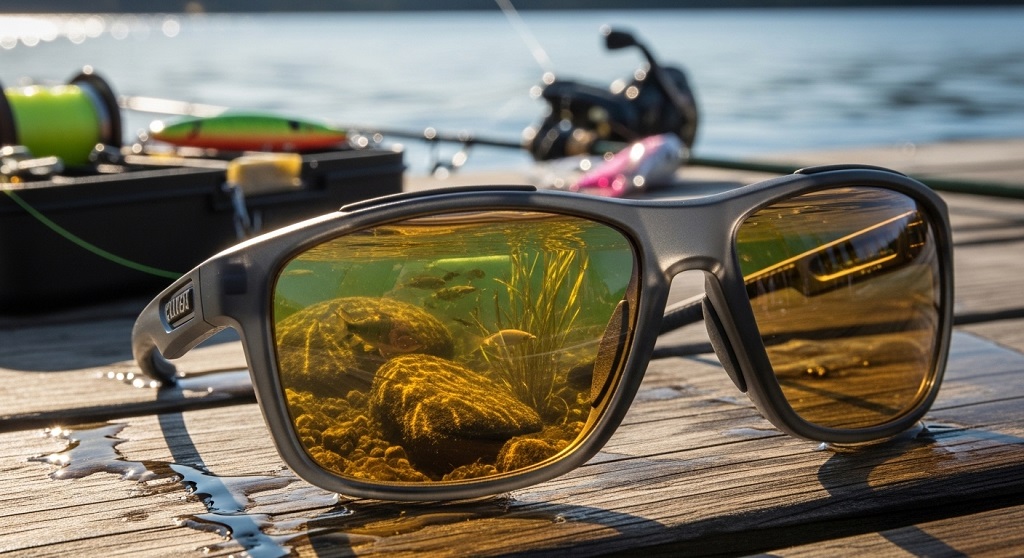
Fishing sunglasses use polarized lenses. These lenses filter horizontal light waves that bounce off water. That filtering reveals what is below the surface.
This matters in both freshwater and saltwater environments. Sight fishing for bass, trout, or redfish depends heavily on visual clarity.
Anglers who switch to polarized fishing eyewear often report:
- Better ability to detect submerged obstacles
- Earlier fish movement recognition
- Reduced eye fatigue during long trips
- Improved casting accuracy
- Better safety in bright sunlight
In competitive fishing environments, visibility advantages directly influence catch rates. Even recreational anglers benefit from improved reaction time.
How do polarized fishing sunglasses improve visibility on water?
Short answer: Polarized lenses block reflected glare, allowing clearer underwater vision and reducing eye strain.
Glare occurs when sunlight reflects horizontally from water surfaces. Human eyes cannot filter this reflection naturally.
Polarized lenses contain a chemical filter aligned vertically. This filter blocks horizontal light waves while allowing vertical light to pass.
The result:
- Clearer water visibility
- Improved contrast
- Sharper structure detection
- Reduced squinting
- Less fatigue during extended fishing sessions
In a field comparison test by an outdoor gear lab evaluating sight-fishing performance, anglers using polarized lenses detected fish movement 35–40% earlier than those wearing non-polarized sunglasses during shallow-water casting trials.
This advantage becomes critical in shallow flats, riverbeds, and shoreline fishing environments.
Which lens color is best for different fishing conditions?
Short answer: Gray lenses suit bright offshore conditions, brown lenses enhance contrast in freshwater, and copper lenses perform well in mixed environments.
Lens color affects contrast and depth perception. Choosing the wrong tint reduces performance.
| Lens Color | Best Environment | Performance Benefit |
|---|---|---|
| Gray | Open water, offshore fishing | Reduces brightness without altering colors |
| Brown | Freshwater lakes and rivers | Enhances contrast and depth visibility |
| Copper | Variable light conditions | Improves clarity and structure detection |
| Amber | Low-light mornings or evenings | Boosts visibility in dim environments |
| Green mirror | Coastal and shallow flats | Balances brightness and contrast |
Professional anglers often carry multiple lens types to adjust based on weather and water clarity.
How important is UV protection in fishing sunglasses?
Short answer: 100% UV protection prevents long-term eye damage and improves comfort during extended exposure to sunlight.
Water reflects ultraviolet radiation more strongly than land surfaces. This increases exposure risk.
Without UV protection, anglers face:
- Photokeratitis (sunburned eyes)
- Cataract risk increase
- Retinal damage over time
- Chronic eye fatigue
Quality fishing sunglasses block both UVA and UVB rays. Always check labels confirming full-spectrum protection.
Polarization alone does not guarantee UV protection. Both features must be present.
What frame styles work best for fishing sunglasses?
Short answer: Wraparound frames provide better coverage, reduce side glare, and improve stability during movement.
Frame design affects performance more than many anglers expect.
Wraparound frames block peripheral light entry. This prevents stray reflections from interfering with underwater visibility.
Look for:
- Non-slip nose pads
- Rubber temple grips
- Lightweight construction
- Full peripheral coverage
Boat anglers benefit from secure-fitting frames that remain stable in wind conditions. Shore anglers benefit from lightweight designs that reduce fatigue.
Should anglers choose glass or polycarbonate lenses?
Short answer: Glass lenses offer better clarity, while polycarbonate lenses provide stronger impact resistance.
Both materials serve different priorities.
Glass lenses:
- Higher optical clarity
- Better scratch resistance
- Longer lifespan
- Heavier weight
Polycarbonate lenses:
- Lightweight comfort
- Impact resistance
- Lower cost
- Slightly lower clarity than glass
Saltwater anglers often prefer glass lenses for visibility range. Kayak anglers frequently choose polycarbonate for safety.
How does lens coating affect fishing performance?
Short answer: Mirror coatings reduce brightness, hydrophobic coatings repel water, and scratch-resistant coatings extend lens lifespan.
Modern fishing sunglasses include specialized coatings designed for marine environments.
Important coatings include:
- Mirror coating for glare reduction
- Hydrophobic coating for water shedding
- Oleophobic coating for fingerprint resistance
- Anti-scratch layers for durability
Hydrophobic coatings help maintain clarity during spray exposure. This matters in offshore fishing conditions.
How should sunglasses fit for maximum fishing comfort?
Short answer: Fishing sunglasses should sit securely without pressure points and block side light effectively.
Poor fit reduces visibility performance. Loose frames allow stray light entry.
Check for:
- No sliding during head movement
- No pressure near temples
- Comfort under hats or caps
- Stable nose grip when sweating
Secure fit ensures consistent polarization alignment. That alignment maintains underwater clarity.
Do fishing sunglasses improve catch rates in real situations?
Short answer: Yes. Improved visibility helps anglers identify structure, detect fish movement earlier, and adjust casting strategy faster.
In controlled freshwater sight-fishing comparisons conducted by regional angling instructors, anglers using polarized eyewear identified submerged fish roughly 30% faster than those using standard sunglasses.
Earlier detection leads to:
- Better lure placement
- Improved hook timing
- Reduced spooking of fish
- Higher strike success rates
These advantages accumulate across an entire fishing session.
What features should beginners prioritize when choosing fishing sunglasses?
Short answer: Beginners should prioritize polarization, UV protection, lens color selection, and secure frame fit.
New anglers often overspend on branding instead of performance features.
Start with:
- Polarized lenses
- 100% UV protection
- Brown or copper lens tint
- Wraparound frame shape
This combination covers most freshwater and inshore fishing environments effectively.
How can anglers choose sunglasses for freshwater vs saltwater fishing?
Short answer: Freshwater anglers benefit from contrast-enhancing lenses, while saltwater anglers need brightness control and durability.
Freshwater environments include vegetation, submerged logs, and structure shadows. Brown lenses increase contrast in these conditions.
Saltwater environments reflect stronger sunlight. Gray or mirror-coated lenses reduce brightness effectively.
Saltwater anglers should also prioritize corrosion-resistant frame materials.
Are expensive fishing sunglasses worth the investment?
Short answer: Higher-priced sunglasses often provide better clarity, durability, and coating performance.
Premium lenses maintain optical alignment longer. They resist distortion across wide viewing angles.
Lower-cost sunglasses may still perform well if they include:
- Polarized filters
- UV protection
- Secure frame design
However, serious anglers benefit from improved clarity consistency offered by higher-grade optics.
Conclusion: How do you choose fishing sunglasses that actually improve visibility?
Choosing the right fishing sunglasses directly improves your ability to read water conditions and detect fish movement earlier.
Start with polarized lenses. Add full UV protection. Select the correct lens tint based on environment. Then choose a wraparound frame that fits securely.
These features work together to reduce glare, increase underwater contrast, and protect your eyes during long sessions.
Many anglers upgrade rods before upgrading eyewear. But visibility influences every cast you make. A better view of the water leads to smarter decisions and better fishing results.
If you want to improve your sight-fishing performance this season, consider testing a polarized lens color suited to your primary fishing location and compare the difference yourself.
Frequently Asked Questions about how to choose fishing sunglasses
Do polarized sunglasses really help with fishing?
Yes. Polarized lenses block surface glare and allow anglers to see beneath the water surface. This improves fish detection and structure visibility significantly.
What lens color works best for bass fishing?
Brown or copper lenses work best for bass fishing because they enhance contrast in freshwater environments with vegetation and structure.
Are mirror-coated fishing lenses better than regular lenses?
Mirror coatings reduce brightness in strong sunlight. They are especially useful in offshore or open-water fishing conditions.
Can fishing sunglasses protect eyes from UV rays?
Yes. Sunglasses labeled with 100% UV protection block harmful ultraviolet radiation and reduce long-term eye damage risk.
Is lens material important for fishing sunglasses?
Yes. Glass lenses provide clearer optics, while polycarbonate lenses offer lighter weight and stronger impact resistance.
Do beginners need expensive fishing sunglasses?
No. Beginners should focus on polarized lenses, UV protection, and proper fit before considering premium features.
How long do fishing sunglasses typically last?
With proper care, quality polarized fishing sunglasses can last several years depending on lens coating durability and usage conditions.
Read More Also: How regularly must a college or school update its website?
Discover More: Mini-Moon Suggestions: a luxury trip without any long-haul flights