
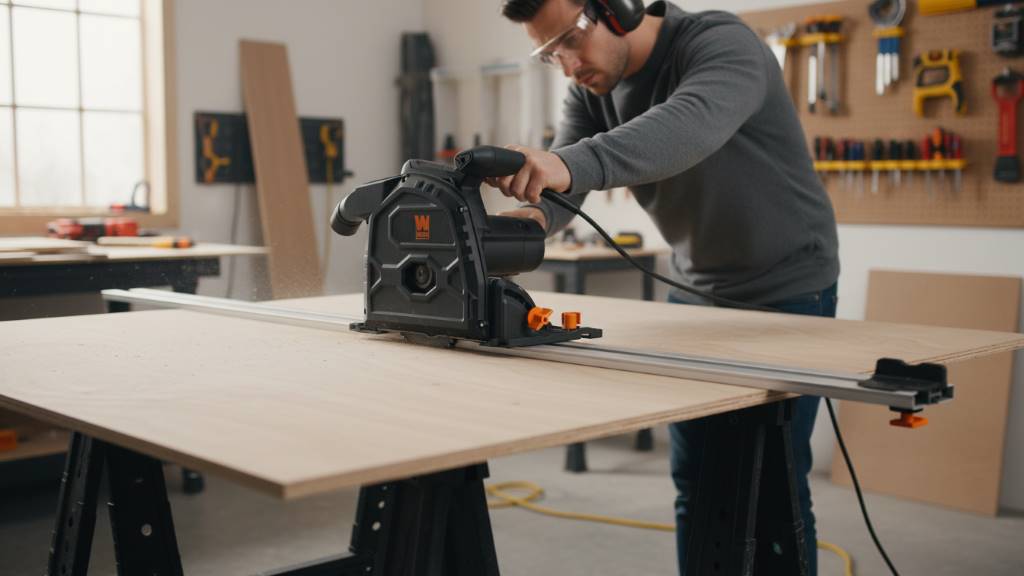
Track saws transform how woodworkers handle large sheets and long cuts. These tools deliver precision that rivals table saws but in a portable package. Many enthusiasts turn to them for cleaner results in projects like cabinetry and furniture building.
Moreover, the rise of home improvement fuels this interest. For instance, a recent survey shows that 72% of U.S. adults engaged in DIY projects in recent years. Additionally, the global DIY tools market continues to expand rapidly. Beginners and pros alike seek reliable options among DIY woodworking tools. This guide breaks down essential features and explores how affordable models stand out.
What Is a Track Saw and Why Do You Need One?
A track saw operates like a circular saw but rides along a dedicated guide rail. This setup ensures straight, splinter-free cuts every time. Users simply align the track, lock it down, and push the saw forward.
In contrast, standard circular saws rely on steady hands or makeshift guides. Track saws eliminate wandering and reduce errors significantly. Therefore, they excel at breaking down plywood or trimming doors accurately.
Many woodworkers start with circular saws for rough work. However, as projects grow more detailed, track saws become essential. They offer plunge capabilities too, allowing mid-panel cuts without starting from an edge. This versatility makes them ideal for intricate tasks.
Additionally, track saws improve safety with enclosed blades and better dust control. Overall, they bridge the gap between portability and professional precision.
Key Features to Look for in a Track Saw
Choosing the right track saw involves evaluating several core elements. Focus on these to match your needs effectively.
Motor Power and Speed Control
Strong motors handle dense materials without bogging down. Look for at least 10-12 amps in corded models. Variable speed adds flexibility, letting you adjust from 2000 to 6000 RPM.
Consequently, slower speeds suit delicate woods, while higher ones tackle tough cuts. This control prevents burning and extends blade life.
Cutting Depth and Bevel Capacity
Maximum depth determines material thickness you can handle. Most models cut up to 2.5 inches at 90 degrees. Bevel options from 0 to 45 degrees enable angled work.
Furthermore, precise depth stops ensure consistent results across multiple passes.
Plunge Mechanism and Safety Features
Smooth plunging allows safe starts anywhere on the workpiece. Riving knives or anti-kickback systems reduce risks further.
Also, blade guards and triggers with locks enhance overall security during use.
Dust Collection and Clean Cuts
Effective ports connect to shop vacuums easily. Good systems capture most debris, keeping lines visible.
Moreover, splinter guards on tracks minimize tear-out for flawless edges.
Track Compatibility and Accessories
Universal designs work with various rails. Longer tracks or connectors expand capabilities.
In addition, parallel guides and clamps improve repeatability in batch work.
Ergonomics and Weight
Comfortable handles and balanced weight reduce fatigue. Cordless options offer freedom but check battery life.
Thus, test grip and balance if possible before committing.
Track Saw vs. Circular Saw: Key Differences
Track saws and circular saws both cut wood efficiently, yet they serve different roles. Circular saws provide versatility for quick, rough jobs. They remain lightweight and maneuverable on job sites.
However, achieving straight lines requires guides or steady guidance. Track saws, on the other hand, guarantee accuracy with built-in rails. This eliminates setup time for perfect cuts.
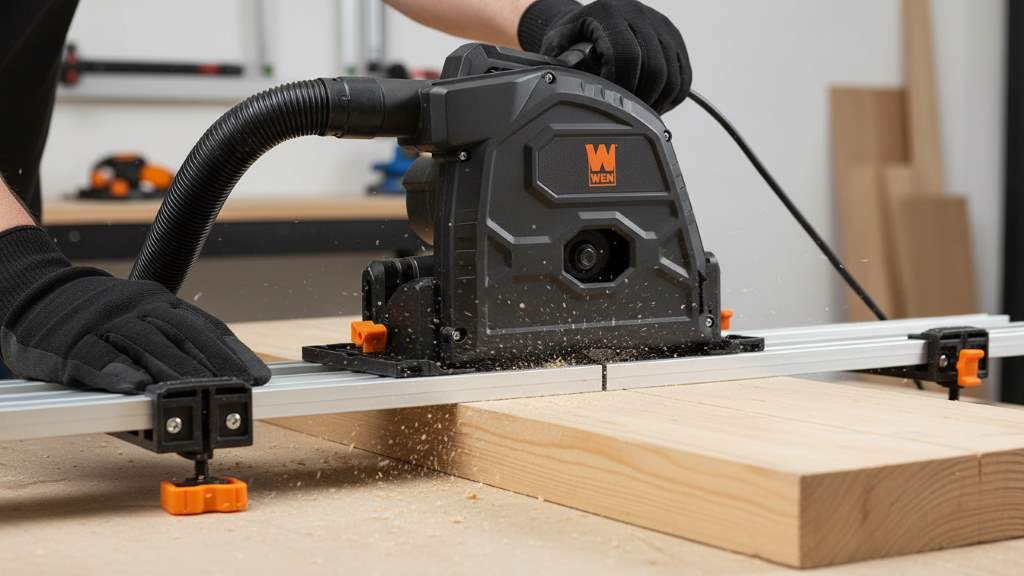
Additionally, track saws plunge safely and collect dust better. Circular saws often scatter chips everywhere. For fine woodworking, track saws reduce splintering dramatically.
Yet circular saws handle curves or irregular shapes more easily. Many start with them and add track saws later. Ultimately, both complement each other in a well-rounded shop.
How the WEN 7.25” Track Saw Fits Into the Market
The WEN 7.25-inch model brings solid performance to budget-conscious users. Its 12-amp motor delivers reliable power for most tasks. Variable speed dial adjusts smoothly across a wide range.
This saw accepts common 7.25-inch blades, making replacements straightforward. Cutting depth reaches up to 2.6 inches straight or 1.85 inches beveled. Plunge action feels controlled and precise.
Users appreciate its compatibility with various tracks. Moreover, the design includes a rotatable dust port for flexibility. It operates off-track as a standard plunge saw too.
In comparison, premium brands offer refined details like scoring cuts. However, the WEN provides excellent value for everyday needs. It suits beginner-friendly saws perfectly, allowing clean results without complexity.
Many report smooth operation on plywood and hardwoods alike. Adjustments for depth and bevel prove intuitive. Consequently, it earns praise for bridging entry-level and mid-range capabilities.
Benefits of Using a Track Saw for DIY Woodworking
Track saws elevate DIY projects noticeably. They produce factory-like edges on sheet goods quickly. This saves time sanding or hiding imperfections.
Furthermore, portability lets you work in garages or on-site. No need for massive table saws in small spaces. Precision boosts confidence, encouraging ambitious builds.
Safety improvements matter too, especially for occasional users. Better dust management keeps workspaces cleaner and healthier. Overall, these tools expand what hobbyists can achieve independently.
Examples abound of bookshelves or cabinets built entirely with track saws. Transitions from rough breakdowns to fine joinery flow seamlessly.
Tips for Getting the Most Out of Your Track Saw
Start with quality blades suited to materials. Carbide-tipped options last longer and cut cleaner.
Always clamp tracks securely for stability. Use anti-slip strips if needed. Practice plunge cuts on scrap first.
Additionally, connect dust extraction whenever possible. This maintains visibility and air quality. Calibrate bevels periodically for accuracy.
Combine with parallel guides for repetitive widths. Experiment with variable speeds on different woods. Soon, you’ll achieve professional finishes consistently.
Store tracks flat to prevent warping. Clean saw bases regularly for smooth gliding.
Related:
Metal v Plastic Plumbing Pipes: The Pros and Cons
Maintenance and Safety Best Practices
Regular care extends tool life significantly. Wipe debris after each use. Check blades for damage often.
Lubricate moving parts as recommended. Store in dry areas away from moisture.
Safety starts with proper stance and firm grip. Wear eye and ear protection always. Keep hands clear of paths.
Moreover, unplug during blade changes. Use riving knives when available. Never force cuts; let the tool work at its pace.
Follow manufacturer guidelines closely. These habits prevent accidents and keep performance peak.
Conclusion
Track saws revolutionize precision in woodworking. They combine portability with outstanding accuracy. Key features like power, depth, and dust control guide smart choices.
The WEN 7.25-inch model offers impressive capabilities for various skill levels. It delivers clean, straight cuts reliably. Whether starting out or upgrading, consider how these tools fit your projects.
Ready to achieve straighter, cleaner results? Explore options that match your needs and start building with confidence today.
FAQs:
Is a track saw worth it for beginners?
Absolutely. Beginner-friendly saws like track models build skills quickly. They forgive minor errors with guided precision. Many find them easier than freehand circular saws.
Can I use a track saw without a track?
Yes. Most function as plunge circular saws off-track. However, tracks provide the straightest results.
What blade should I use for clean cuts?
Fine-tooth carbide blades work best. 40-60 teeth reduce splintering on plywood.
How does a track saw compare to a table saw?
Track saws offer portability and sheet breakdown ease. Table saws excel at repetitive small cuts. Many use both for complete setups.
Are cordless track saws powerful enough?
Modern ones rival corded in many tasks. Battery life improves steadily, suiting most DIY sessions.
Ref:
- Statista survey on DIY participation: https://www.statista.com/topics/1316/forest-products-industry/ (related industry context)
- U.S. DIY tools market insights: https://www.databridgemarketresearch.com/reports/global-do-it-yourself-diy-tools-market
- Track saw comparisons: https://www.protoolreviews.com/best-track-saw-reviews/
- WEN product details: https://wenproducts.com/products/wen-ct1274-12-amp-7-1-4-inch-variable-speed-plunge-cut-circular-track-saw