
Your surfboard is more than just a piece of equipment. It is a prized possession that deserves proper care. Whether you are a weekend warrior or a seasoned surfer, storing your board correctly can make a big difference. Poor storage leads to dings, warping, and faded finishes. Fortunately, modern storage solutions make it easy to keep your board in top condition. This guide will walk you through everything you need to know.
Why Proper Surfboard Storage Matters
Many surfers overlook storage until something goes wrong. A surfboard left leaning against a wall can warp over time. One left in direct sunlight can yellow, blister, or lose its structural strength. Therefore, understanding why proper storage matters is the first step toward protecting your investment.
Heat is one of the biggest enemies of a surfboard. High temperatures soften the foam core and can cause delamination. Humidity, on the other hand, can affect the fins and tail. Additionally, physical impact from accidental bumps can crack the resin. A good storage system removes most of these risks with minimal effort.
Choosing the Right Location for Storage
Location is everything when it comes to storing your surfboard. Ideally, you want a cool, dry, and shaded space. A garage, spare room, or dedicated surf storage area all work well. However, avoid places with direct sunlight, like a car trunk or outdoor patio, especially during summer months.
Basements can also be tricky. While they are cool, they can be damp. Moisture encourages mold, which can seep into your board over time. If a basement is your only option, consider using a dehumidifier nearby. The goal is a stable environment where temperature and moisture levels stay consistent.
Using Surfboard Racks and Protective Covers
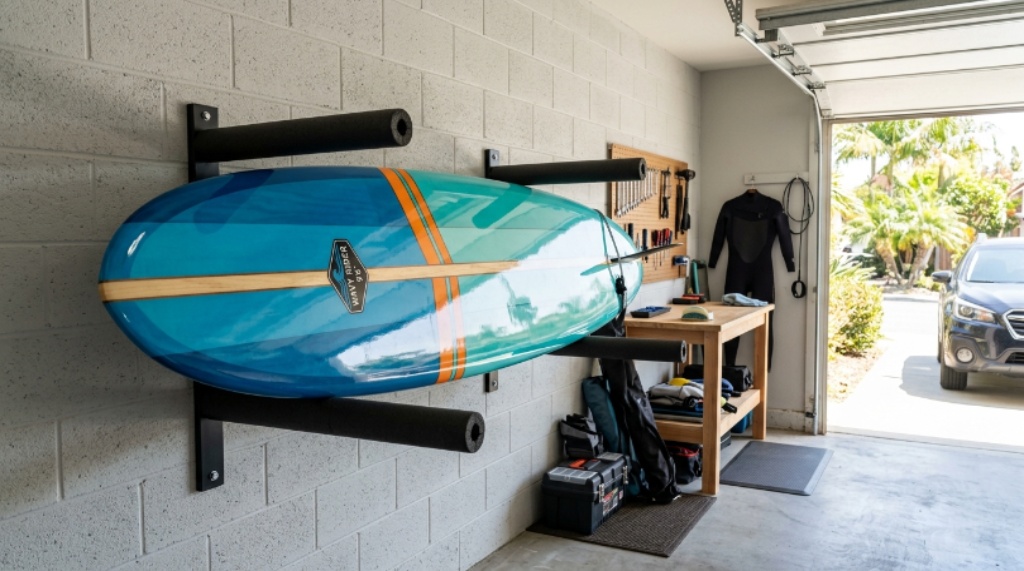
One of the smartest investments you can make is a proper set of surfboard racks. These wall-mounted or freestanding systems hold your board securely off the ground. They distribute the board’s weight evenly, which prevents pressure points that cause dents or warping. Many modern surfboard racks are padded with foam or soft rubber, so the board rests without scratching.
Alongside the rack, protective covers play an equally important role. A good cover shields the board from dust, UV rays, and accidental bumps. Protective covers come in various materials, including neoprene, nylon, and canvas. Each material offers a different level of protection. Neoprene, for example, provides both padding and water resistance, making it ideal for transport as well as storage.
Together, these two elements form a complete storage system. They address both the structural support and surface protection needs of your board. This combination is the foundation of any smart storage setup.
Wall-Mounted vs. Freestanding Storage Systems
Wall-mounted storage systems are great for saving floor space. They keep boards elevated, which is especially useful in smaller garages or apartments. Installation is usually straightforward. Most systems require just a few screws and wall anchors. Once mounted, they hold boards securely while keeping the floor clear.
Freestanding systems, however, offer more flexibility. You can move them from room to room or take them to a second location. They work well in rental properties where wall mounting is not allowed. Additionally, freestanding racks often hold multiple boards, making them a great choice for families or households with more than one surfer.
When deciding between the two, consider your space and how often you move. If you have a permanent setup at home, wall-mounted options are usually more secure. For renters or those who travel frequently, a freestanding system offers more convenience.
How to Store Multiple Boards Safely
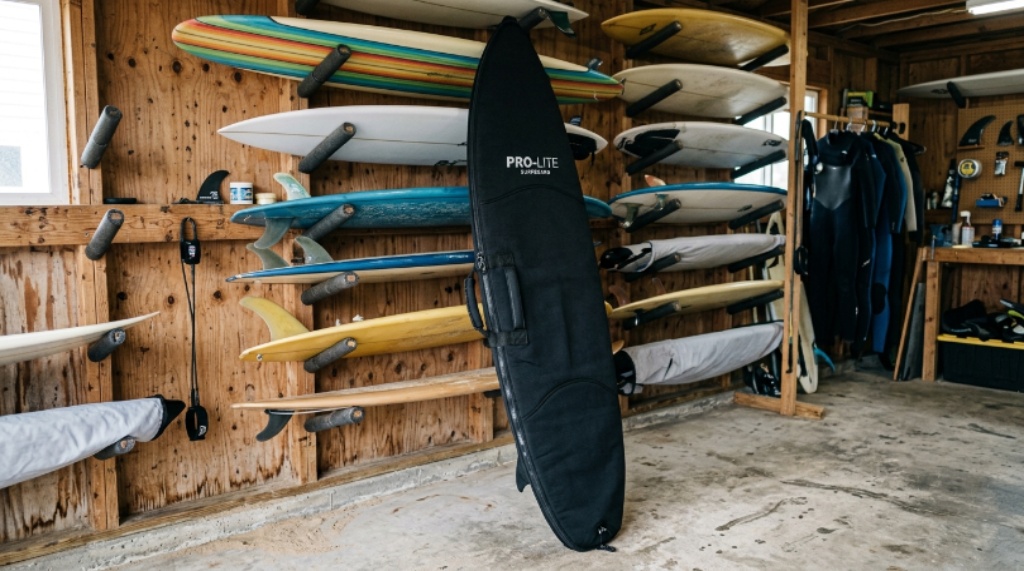
If you own more than one surfboard, organization becomes key. Stacking boards directly on top of each other is never a good idea. The fins can press into the deck of the board below, causing deep pressure dings. Instead, use a multi-board rack that keeps each board in its own slot.
Here are some tips for storing multiple boards:
- Always store boards with the fin side facing out or with fins removed to avoid damage.
- Place your most-used board at the front for easy access.
- Use individual sleeves or bags for each board to prevent them from knocking into each other.
- Label your bags or racks if you have boards of similar size, so you can identify them quickly.
Following these simple steps will keep your entire quiver in great shape, season after season.
Temperature and Climate Control for Surfboard Storage
Temperature control is often underestimated in surfboard storage. Extreme heat causes the foam core to expand and push against the fiberglass shell. This leads to bubbles or bumps on the surface, commonly called pressure dents. Once these appear, they are difficult to repair without professional help.
The ideal storage temperature for most boards is between 60 and 75 degrees Fahrenheit. If you live in a hot climate, consider storing your board indoors with air conditioning during summer. Additionally, never leave a board in a parked car on a hot day. Car interiors can reach temperatures far above 100 degrees Fahrenheit, which is enough to cause serious damage within minutes.
Cold climates pose their own risks. Freezing temperatures can make fiberglass brittle and more prone to cracking. Therefore, if you live somewhere cold, bring your board inside rather than leaving it in an unheated garage during winter.
Travel Storage: Keeping Your Board Safe on the Go
Traveling with a surfboard adds another layer of challenge. Airports, car rides, and boat trips all introduce new risks. For air travel, a hard-shell travel bag or a padded boardbag with extra foam inserts is strongly recommended. These offer protection against the rough handling of luggage systems.
For road trips, a roof rack with padded cradles keeps the board secure and prevents vibration damage. Make sure the straps are tight but not overly so, as excessive tension can dent the rails. Additionally, always cover the board with a bag or towel to protect it from road debris and UV exposure during the drive.
When storing a board at a surf resort or rental, ask about their storage facilities. A shaded, indoor area is always preferable. If only outdoor storage is available, keep the board covered and out of direct sunlight as much as possible.
Maintenance Tips Before and After Storage
Good storage habits go hand in hand with regular maintenance. Before placing your board in storage, always rinse it with fresh water. Salt residue can corrode fins, leash plugs, and vent plugs over time. After rinsing, let the board dry completely before covering it. Storing a wet board in a sealed bag or tight space encourages mold and odor.
Additionally, inspect the board for dings or cracks before storage. Small cracks let water seep in, which can expand the foam and cause long-term damage. Repair any dings with a ding repair kit before putting the board away. This takes only a few minutes but can save hundreds of dollars in future repairs.
Finally, remove your fins if storing the board for an extended period. Fins left in their boxes under pressure can warp the boxes or crack the surrounding glass. Storing fins separately in a small bag keeps both them and the board in better condition.
Conclusion
Storing your surfboard properly does not have to be complicated. By choosing the right location, using the correct equipment, and following a few simple maintenance steps, you can protect your board for years to come. Modern solutions make it easier than ever to keep your board safe at home or on the road. Temperature control, proper cleaning, and thoughtful organization all play a role in long-term board health. Whether you own one board or an entire quiver, these practices will help you get the most out of your equipment every time you paddle out.
Frequently Asked Questions
1. How should I store my surfboard at home?
Store your surfboard horizontally or vertically on a padded wall rack in a cool, dry, and shaded area. Keep it away from direct sunlight, heat sources, and damp spaces. Always use a protective bag or cover when the board is not in use.
2. Can I store my surfboard outside?
Outdoor storage is not ideal for long-term use. If you must store your board outside, keep it in the shade at all times and use a heavy-duty cover to protect it from UV rays, rain, and dust. Bring it indoors whenever possible, especially during extreme weather.
3. Is it okay to store a surfboard vertically?
Yes, storing a surfboard vertically is fine as long as it rests on a padded surface at the tail end. Make sure the board is stable and secured to prevent it from falling. Wall-mounted vertical racks with foam padding are a popular and safe option for vertical storage.
4. How do I protect my surfboard during long-term storage?
For long-term storage, remove the fins and store them separately. Repair any dings before storing. Place the board on a padded rack and cover it with a breathable bag. Store it in a climate-controlled space to prevent heat damage or moisture buildup.
5. What type of bag is best for storing a surfboard?
For home storage, a lightweight nylon or canvas bag works well to keep dust and minor impacts away. For travel or outdoor storage, a neoprene or padded boardbag offers much better protection. Choose a bag that fits your board’s length and shape snugly without compressing the rails.
Related Topics:
How to Choose Essential Surfboard Accessories for Beginners
Holiday Ideas if you are Staying in the UK this Summer